What does it cost to be seen? All About Eve doesn't resolve the question. Neither do we. But the films this week suggest you start by asking who decides what you're allowed to perform.
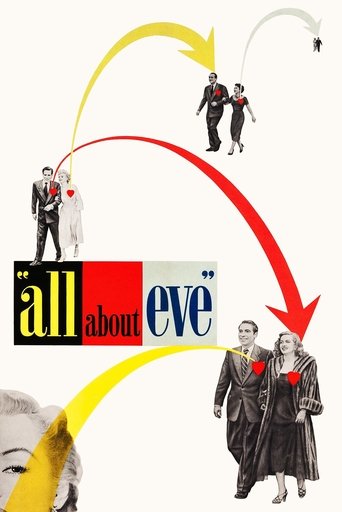
Performance is the oldest contract in cinema. You perform; I watch. That contract has always been fragile. The question isn't whether the performance is real — it's who gets to decide what counts as real in the first place. All About Eve understood this in 1950: Eve Harrington doesn't fail because she's fake. She succeeds because her performance is more convincing than Margo's, more complete, more total. The tragedy of the film is that it shows us a world where the best performance wins, and we all know how that ends.
Seventy-five years later, we live in that world. Every screen is a stage. Every scroll is a performance. Every like is a vote on whether your performance was convincing enough. The machinery has gotten faster, the feedback more immediate, the stakes somehow both higher and lower. You perform your life in real time and the audience decides who you are before you finish the sentence.
This issue circles the question that All About Eve raised but never quite answered: What's left when the performance becomes the only thing that matters?
The film that became one of cinema's sharpest studies of ambition almost had a completely different lead. Claudette Colbert broke her back on another set. Marlene Dietrich was judged too artificial. Ingrid Bergman was in Italy and wouldn't leave. In desperation, Darryl F. Zanuck called Bette Davis — 42, dismissed by her own studio after eighteen years, widely written off as box-office poison — and told her she had ten days to be ready. Davis said yes. Meanwhile, the story itself had begun as a cautionary whisper: a Viennese actress named Elisabeth Bergner had taken in a devoted young fan who had waited outside her stage door in 1942, moved by the woman's apparent destitution and devotion. The fan's stories, it turned out, were entirely fabricated. She had been performing grief, performing loyalty, performing need — and the actress had never suspected, because the performance was perfect. That anecdote passed to writer Mary Orr, became a Cosmopolitan short story in 1946, and then became All About Eve. Orr received no screen credit. The film received fourteen Academy Award nominations, a record it held for over forty years.
What Mankiewicz understood — and what distinguishes this from every subsequent iteration of the same story — is that Eve Harrington is not a villain. She is a student. She watches Margo Channing with the forensic attention of someone who has decided that identity is a craft, not a birthright, and she learns it the way any serious performer would: total immersion, close observation, repetition until the copy exceeds the original. The film's real subject is not theft. It is the question of whether the self that gets performed eventually becomes the only self there is. Margo already knows the answer; it's why she's terrified. She has been performing Margo Channing for so long — on stage, at parties, in her own apartment — that she cannot locate the woman underneath. Eve's arrival doesn't threaten Margo's identity. It exposes how little of it was ever hers to protect.
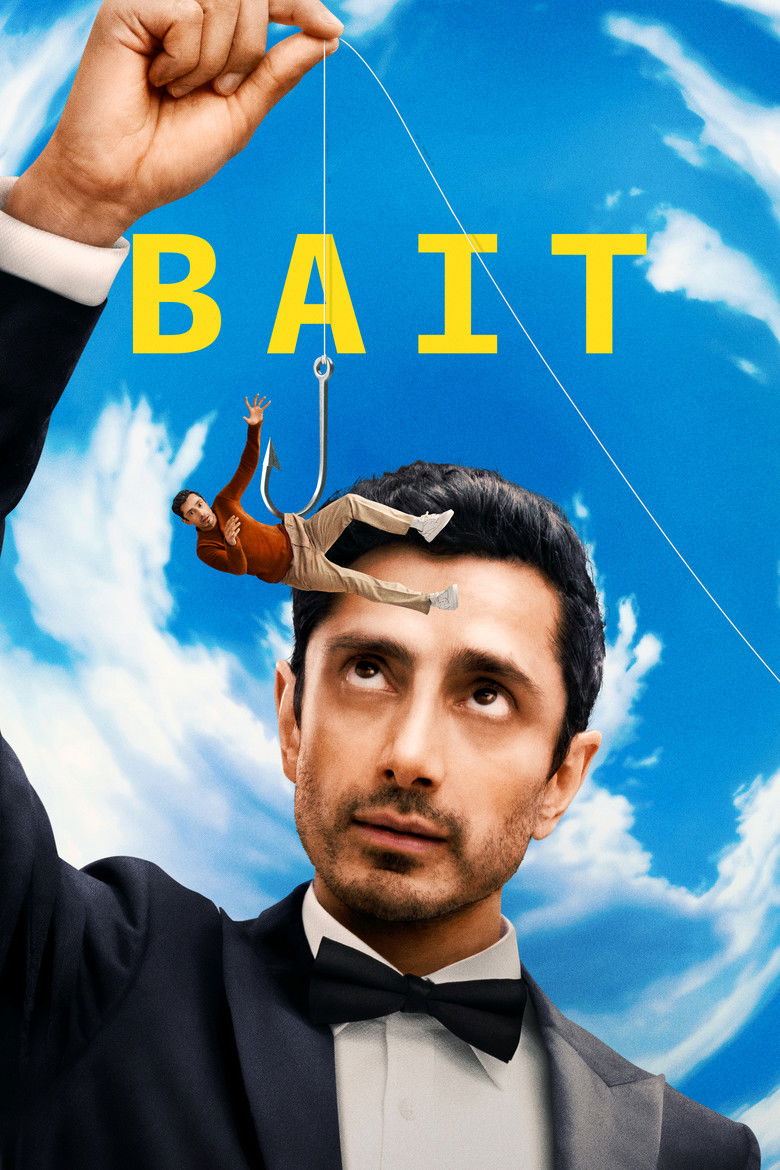
Watch Bait this week — Riz Ahmed playing an actor auditioning to play James Bond, at the studio that actually owns James Bond — and then watch this. The Bond casting process that has stretched across 2025 and into this year is its own version of the stage-door scene: actors performing competence, performing danger, performing the iconic silhouette, all of them hoping the performance will be mistaken for the thing itself. Mankiewicz filmed that logic seventy-five years ago, in black and white, with better dialogue. The Comeback's Valerie Cherish, still performing relevance for a camera that has become an AI, is Margo Channing who never escaped the dressing room. The machinery changes. The audition never ends.
“Is there a self beneath the performance, or is the performance all there ever was?”
Cinema has spent a century treating this as an acting question. It isn’t. It’s a philosophical one that acting makes unavoidable. When a performance is good enough, the boundary between person and role stops being visible — from the outside and, sometimes, from the inside. The camera doesn’t just record what actors do. It records what happens to them.
Jim Carrey spent the entire shoot of Man on the Moon (1999) as Andy Kaufman. Not in character — as. He refused to break for lunch as Jim Carrey. He terrorised co-stars as Tony Clifton, Kaufman’s abrasive alter-ego, without warning. The documentary Jim & Andy: The Great Beyond (2017) shows what Milos Forman’s cameras didn’t: an actor who had, by the film’s end, genuinely lost the thread of who he was. Carrey describes the shoot not as performance but as possession. The self, he says, was a fiction he’d been maintaining long before Kaufman. The role just made that visible. This is the logic Method acting always contained but rarely admitted: if you commit fully enough, there is nothing left to come back to. Brando on the set of Apocalypse Now — documented in Eleanor Coppola’s Hearts of Darkness — arrived as Kurtz rather than preparing for him. Bloated, unscripted, refusing to read Conrad, he improvised the character from his own interior. The film didn’t reveal Brando playing Kurtz. It revealed Kurtz as what Brando had already become. When the camera is running and the performance is total, the self doesn’t hide behind the role. It dissolves into it.
In Carl Th. Dreyer’s The Passion of Joan of Arc (1928), Maria Falconetti was reportedly subjected to shoot after shoot of Dreyer forcing her to kneel on stone floors, denying her sleep, demanding tears without context. What the camera caught — in that famous sequence of close-ups, face filling the frame, eyes tracking upward — is not a performance of suffering. It is suffering, looking for a way out through the role. Falconetti never appeared in another film. The performance didn’t consume her self; it spent it. Forty years later, Werner Herzog would document the same mechanism in reverse. Klaus Kinski, through every collaboration from Aguirre, the Wrath of God (1972) to Fitzcarraldo (1982), was technically playing characters. What you actually watch is Kinski — the fury, the grandiosity, the specific texture of his contempt — wearing thin fictional disguises. Herzog’s own documentary My Best Fiend (1999) is essentially a film about how completely Kinski’s self refused to be absorbed by any role he was ever given. And when Dustin Hoffman arrived on the set of Marathon Man (1976), sleepless for three days to prepare for a torture scene, Laurence Olivier looked at him and said: “Have you tried acting, dear boy?” The anecdote survives because it names the thing both men sensed: that there was a self Hoffman was protecting by not acting, and that protecting it was the whole point. The self beneath the performance doesn’t speak. But it resists.
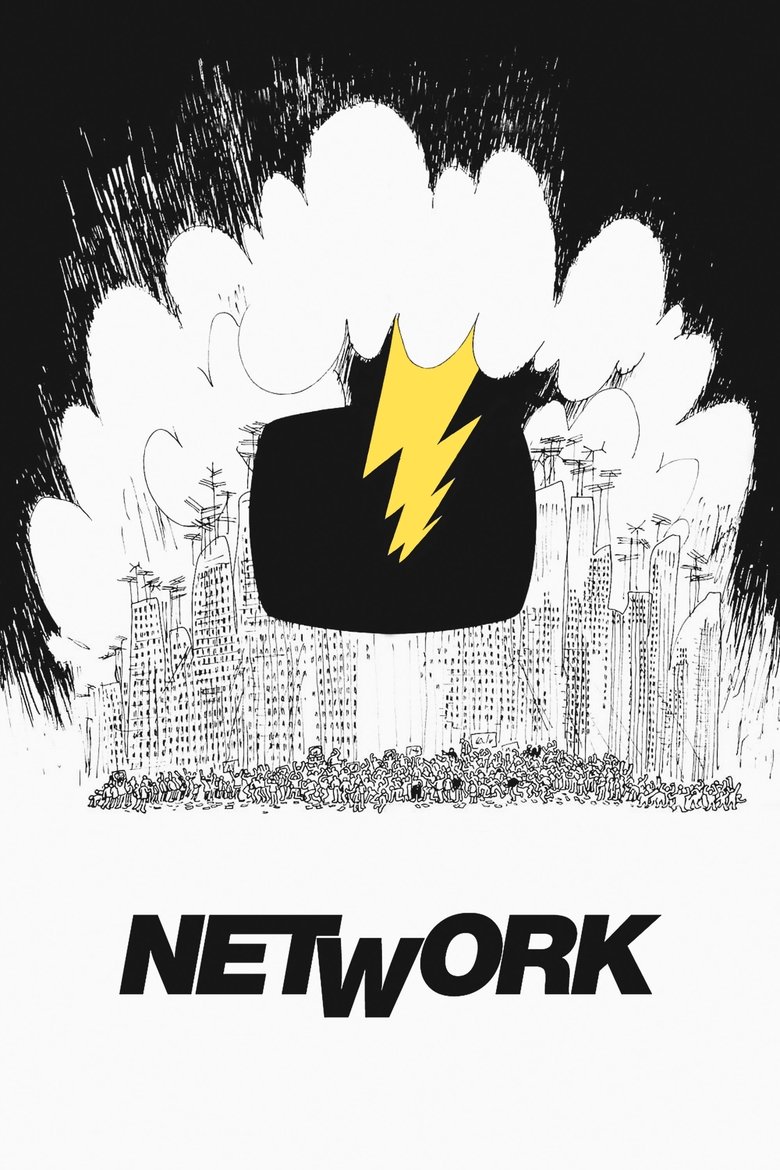
Paddy Chayefsky wrote Network in 1976 as a warning. It was received as satire. Fifty years on it is neither — it is documentation. Howard Beale, UBS Evening News anchor, is told on-air that he has two weeks before he’s cancelled. He announces on live television that he intends to shoot himself next Tuesday. Ratings soar. The network, rather than pulling him off air, promotes the breakdown. A woman named Diana Christensen — the head of programming, played by Faye Dunaway with a terrifying clarity — sees that authentic human despair is the most compelling content available. She schedules it.
What Chayefsky understood, and what makes the film still running hot, is the mechanism. The performance isn’t faked — Beale’s distress is real. What’s faked is the frame around it: the pretence that what is being broadcast is news, that what the audience is watching is a man breaking down rather than a product being consumed. The content is real. The relationship to it is the lie. Peter Finch died before the Academy Awards and received a posthumous Oscar. Faye Dunaway won. The film grossed $23 million on a $4 million budget. It said something it wasn’t supposed to say — that the audience would watch a man perform his own destruction, that the network would let them, and that the line between the two had already been erased. Nobody argued the premise. They argued the tone.
In a fortnight when an actor is auditioning to become James Bond — performing himself performing a performance — and Valerie Cherish is back on television performing her own irrelevance for a camera she controls, Network is not a parable. It is the origin document. The question the film asked in 1976 — what happens when the performance of authenticity becomes more valuable than authenticity itself — has not been answered. It has been industrialised.


Screen Share is published fortnightly. Issue 005 publishes May 9, 2026.


The 2023 WGA strike won language requiring that AI cannot be credited as a writer and cannot be used to undermine minimums — but enforcement relies on writers knowing when AI has been used in their material, which studios are not always transparent about. In early 2026, several disputes have emerged over whether AI-assisted development drafts constitute a breach of MBA minimums. The institutional story is not that the unions lost — they won more than many expected — but that the fight moved from the picket line into contract interpretation. The 2023 MBA expires May 1, 2026. The next negotiation begins now.
Why this matters: The WGA won the rule but hasn’t yet built the audit mechanism. That gap is where institutional power reasserts itself quietly — and the leverage to close it resets at the negotiating table.
WGA 2023 MBA summary →Before his death in September 2024, James Earl Jones signed an agreement permitting his archival voice recordings to be used for future Lucasfilm projects. In May 2025, Disney and Epic Games deployed an AI-generated version of Jones’ voice in Fortnite as a live, conversational character — dynamically generating new performances Jones never gave. The family had consented. The union had not been notified. SAG-AFTRA filed an unfair labour practice charge against Llama Productions (the relevant production entity), arguing the companies had unilaterally altered the terms of employment by replacing bargaining-unit performers who had previously voiced Vader in games. Disney and Epic maintained personal estate consent was sufficient, according to Variety and THR. The charge was later withdrawn after the parties reached a quiet resolution — the terms undisclosed.
Why this matters: Personal consent, obtained before death, was used as a route around collective bargaining. What was suppressed was not the voice — it is everywhere — but the labour framework governing what happens to a performer’s work once the performer is gone.
Read the Variety report →Several casting platforms have introduced AI-assisted audition tools that record, transcribe, and score self-tape submissions. In December 2025, ACTRA wrote to casting services after receiving “a growing number of questions about whether self-tape material could be used to develop or train AI systems” — Casting Networks publicly stated they do not use audition tapes for training, as reported in the ACTRA Toronto letter. The denials are on record. The structural question remains regardless: actors’ unpaid audition performances have always been labour without compensation. If that performance also generates evaluation data used to assess future performers, it becomes a resource extracted before any contractual relationship exists — outside the consent and compensation frameworks the unions built.
Why this matters: The platforms have denied it. That denial was only necessary because the question was raised. The architecture permitting it exists whether or not it is currently used.
ACTRA letter to casting services →