Issue 003 — April 2026
Screen Share 2 April 2026
This Issue

Truth.

What does it take to actually know something?

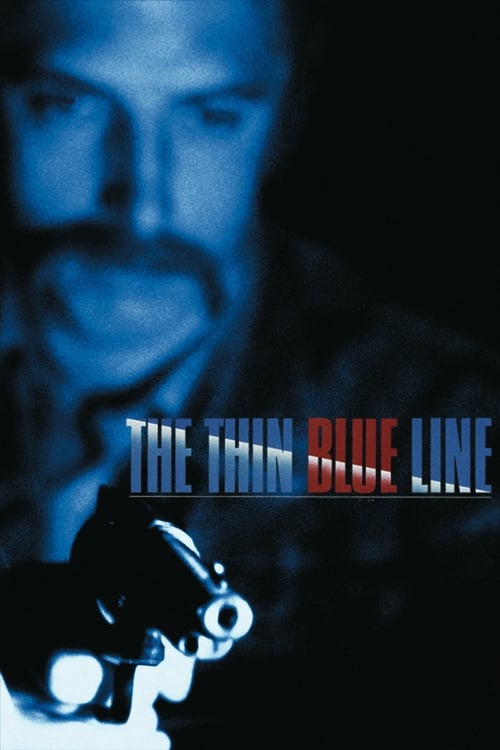
Lead Film: The Thin Blue Line (1988, Errol Morris)
Read This Issue → Browse the Archive
Scroll
A note from the editor

There’s a strange comfort in learning that cinema has been worried about this longer than we have. The Thin Blue Line came out in 1988 — a film built from re-enactments, contradictions, and a Philip Glass score that made the whole thing feel like a fever dream of justice. Errol Morris didn’t point a camera at the truth and press record.

He made a film that functioned like a legal argument: methodical, obsessive, built on the premise that if you look at something long enough and from enough angles, something true will eventually surface. It got Randall Adams released from prison. The camera as instrument of justice rather than witness to it. That felt important to sit with, particularly right now, when the shows I’ve been watching — Ripley, Adolescence, Apple Cider Vinegar — are all fundamentally about the gap between performance and fact. How long someone can maintain a story. How much we want to believe it. These aren’t just thriller mechanics. They’re the question the whole issue is circling.

What does it take to actually know something?

Niall Editor, Screen Share
The Rewind | A film from the archive that speaks to right now
Each issue we reach back into cinema history for a film that earns its place in the conversation right now. Not a classic for a classic’s sake — something that speaks to the week’s theme in a way that might surprise you.
The Thin Blue Line (1988)
1988 · Errol Morris · Score by Philip Glass

The Thin Blue Line

In 1976, a Dallas police officer was shot dead during a routine traffic stop. A drifter named Randall Adams was convicted and sentenced to death. He was almost certainly innocent. Errol Morris spent two years pulling the case apart, then did something no documentary filmmaker had done before: he put it back together — not as it happened, but as it might have happened, over and over, from different angles, under different light. The Thin Blue Line didn’t just expose a wrongful conviction. It got Adams released. And it did so by constructing fictions.

Documentaries, by 1988, had a settled grammar: talking heads, archival footage, narration that held the viewer’s hand toward a conclusion. Morris threw that out. The Thin Blue Line uses no narrator. It lets its subjects contradict each other without editorial intervention. And it reconstructs the night of the murder repeatedly — the same milkshake cup, the same stretch of road, the same gunshot — each time slightly differently, each time implicating a different version of events.

The film worked. Randall Adams walked free, in part because of what Morris built. And what Morris built was a series of staged images, lit and scored for maximum effect, designed to lead you to a conclusion. Does that make it truth or manipulation? The honest answer is both. The Thin Blue Line is a film that got an innocent man freed by being, in certain technical senses, dishonest about its own nature. If that makes you uneasy, it should. It should also make you think about every documentary you’ve ever trusted.
Watch Alongside
Standard Operating Procedure (2008, Errol Morris)
Morris turns the same forensic lens on the Abu Ghraib photographs — images the world thought it understood — and dismantles that certainty completely. Where The Thin Blue Line asks whether a reconstruction can reveal truth, Standard Operating Procedure asks whether real photographs can conceal it. Together, they form the sharpest argument in cinema about the limits of the image as evidence.
The Thin Blue Line is available to stream on MUBI and Apple TV+.
💬 The Argument | One question. No verdict.
Every issue we pick one interpretive question and lay out two honest readings — no winner, no consensus. The point isn’t to settle the debate. It’s to make the debate worth having.
“Documentaries manipulate. Fiction illuminates. We’ve always known this — and ignored it. Now that AI can fabricate footage indistinguishable from the real thing, does the lie finally matter?”

The contract between documentary and audience has never been what we pretended it was. When Errol Morris reconstructed crime scenes for The Thin Blue Line, audiences accepted it as investigative truth. When Robert Flaherty staged Nanook’s igloo scenes, nobody called it fiction. We weren’t deceived. We cooperated. The question this issue circles is whether that cooperation has always mattered — or whether it only starts to matter now.

Reading A — “The Lie Always Mattered”

Joshua Oppenheimer’s The Act of Killing made this cooperation explicit — he handed perpetrators of mass murder a camera and let them re-enact their crimes as cinema. The film’s horror isn’t that it distorts reality. It’s that it shows us how reality is always already a performance, and we always already knew. AI fabricated footage doesn’t introduce manipulation into documentary. It removes the deniability that made manipulation comfortable. Now the seams are gone — and so is our excuse. The question isn’t whether we’ve been lied to. It’s whether we can keep pretending we didn’t ask for it.

Reading B — “Truth Was Always Negotiated”

Come and See — the most devastating film ever made about the Second World War — features no archival footage, no survivors’ testimony, no documentary evidence of any kind. It is also truer to what happened on the Eastern Front than anything captured at the time. The Battle of Algiers was mistaken for a documentary. Lanzmann’s Shoah refused archival footage on principle. The current panic about AI-generated footage assumes there was once a golden age when documentary meant something pure and factual. There wasn’t. The panic is real, but it’s not about truth — it’s about power: who gets to fabricate, with what resources, in whose interest.

Provocation: If we’ve always needed cinema to lie to us to get at something true, what does it mean that the lies are now too perfect to need us at all?
Which reading lands for you?
The Lie Always Mattered0%
Truth Was Always Negotiated0%
Your vote:
🎭 Discover | Not genre. Emotion.
Algorithms sort by genre. We sort by feeling. Pick the mood you’re in and we’ll find something worth watching. 21 films. 7 ways to approach truth. None of them comfortable.
Which would you watch tonight?
Flashpoint | The moment something ignited
Cinema has always been political. Flashpoint looks at the moment a film said something it wasn’t supposed to — and what happened when it did.
JFK (1991)
1991 · Oliver Stone · TMDB #820

JFK

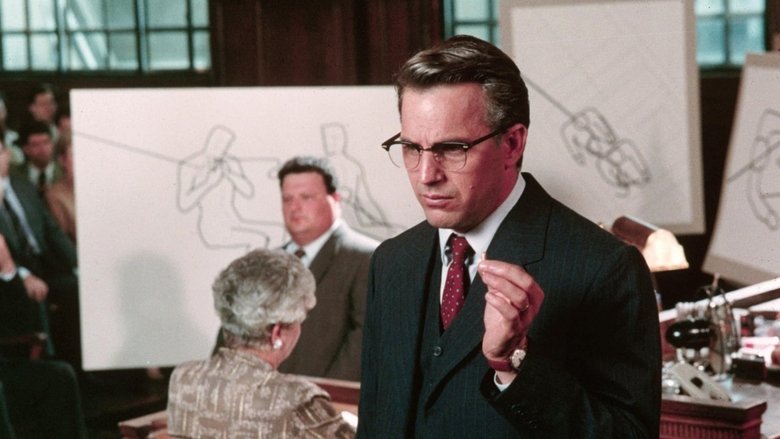
Oliver Stone’s JFK arrived in December 1991 with the force of something that wanted to be believed. The film reconstructs the assassination of President Kennedy through the eyes of New Orleans district attorney Jim Garrison, using every instrument in cinema’s persuasion toolkit: handheld urgency, grainy archival-style inserts, rapid-fire montage, re-enacted footage cut against real documentary material until the two become nearly indistinguishable. He staged scenarios he openly acknowledged were speculative, then filmed them with the visual grammar of fact.

The centrepiece — a meticulous reconstruction of Dealey Plaza arguing a second shooter on the grassy knoll — was presented with the confidence of a closing argument. The film grossed over $200 million worldwide and landed eight Academy Award nominations. By 1992, Congress had passed the JFK Records Collection Act, mandating the release of classified government documents. A Hollywood film had moved legislation.

What remains unresolved is the question the film smuggled in: what does a filmmaker owe an audience when the story they’re telling cannot be verified? When cinema borrows the aesthetic vocabulary of journalism — the shaky cam, the found-footage texture, the procedural momentum — it carries an implicit promise. The defenders of JFK argue it opened a conversation that needed opening. The critics argue that millions of people left those cinemas not with questions but with answers — and that Stone knew they would. Both things can be true at once. That’s what makes JFK a genuinely difficult film to hold — not because of what it claims, but because of how fluently it claims it.

📡 The Signal | AI in film and television — the deal, the resistance, the tool
The Signal tracks AI’s intersection with the film and television industry. Three items each issue: a deal, a resistance, a tool. No hype, no panic — just what happened and what it means.
The Deal

In February 2026, deepfake detection startup Resemble AI closed a $13 million strategic round backed by Sony Innovation Fund, Google’s AI Futures Fund, Comcast Ventures, and Okta Ventures. The funding accelerates global rollout of DETECT-3B Omni, claiming 98% accuracy across 38+ languages. Deepfake-related fraud hit $1.56 billion in losses in 2025. The investor list signals the industry now treats authentication as infrastructure, not a niche.

More info here →
The Resistance

At IDFA in November 2025, members of the Archival Producers Alliance published comprehensive Best Practices for generative AI use in archive-led documentary filmmaking. The guiding principle is transparency: audiences must know when AI has been used. The International Documentary Association has since hosted sessions on the guidelines. It’s the first formal industry framework to draw a line between AI as a tool and AI as a fabrication.

More info here →
The Tool

Sony became the first camera manufacturer to embed C2PA content credentials directly into video files — via firmware updates to the FX3, FX30, a9 III, a1 II, and the PXW-Z300 camcorder. Each clip gets a tamper-evident digital signature at capture, creating a verifiable chain of provenance from camera to distribution. For documentary and news cinematographers, it’s the clearest practical answer yet to the question: how do you prove this footage is real?

More info here →
The Pulse | Three films worth your time this week
Three films in cinemas and on streaming this week that reward a truth-lens. Not lectures about honesty — films where the question of what actually happened sits at the centre, unresolved, uncomfortable.
Project Hail Mary
In Cinemas Now · IMAX
In Cinemas
Project Hail Mary
Phil Lord & Christopher Miller, 2026
A man wakes up alone in deep space with no memory of who he is or why he’s there. Lord and Miller’s adaptation opens in radical disorientation: Ryland Grace (Ryan Gosling) must reconstruct himself from evidence, using the scientific method as existential detective work. Memory as unreliable narrator — the self as hypothesis, truth as something pieced together rather than simply known.
When you can’t trust your own mind, what does knowing anything actually mean?
Anatomy of a Fall
Palme d’Or Winner · Now on Netflix
Streaming
Anatomy of a Fall
Justine Triet, 2023 · Netflix
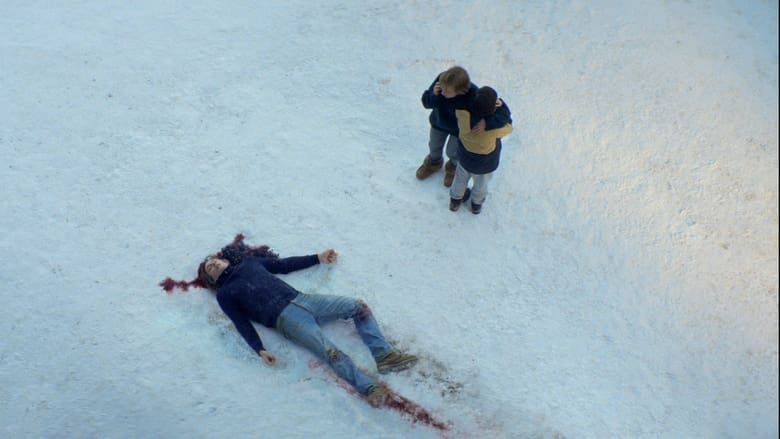
In Justine Triet’s Palme d’Or-winning masterwork, a woman is tried for her husband’s death in the French Alps. Was it suicide? Accident? Murder? The courtroom becomes a machine for manufacturing competing truths — audio recordings are played, reinterpreted, weaponised. The only eyewitness is their partially-sighted son. A film that understands how testimony shapes rather than reveals reality.
The facts of the case never change — only the story wrapped around them.
The Lady
Streaming Now · BritBox
Streaming
The Lady
Lee Haven Jones, 2026 · BritBox
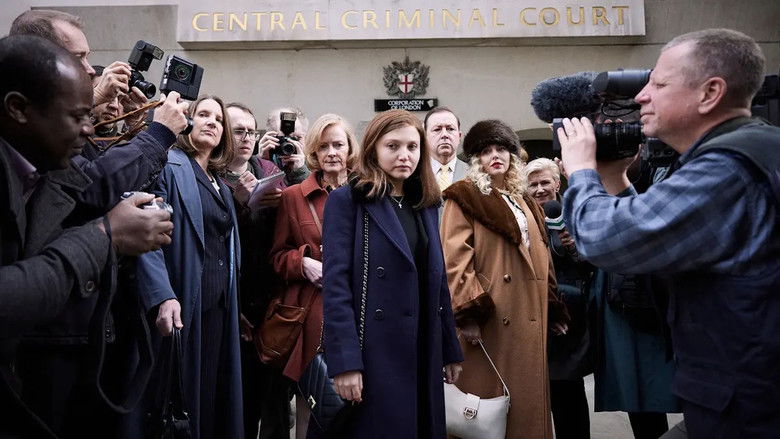
Lee Haven Jones’s four-part drama dramatises the story of Jane Andrews, royal dresser to Sarah Ferguson and convicted murderer. Andrews refused any involvement in the production — making The Lady a reconstruction built entirely from the outside. Mia McKenna-Bruce carries the central contradiction: a version of someone who cannot speak for herself, a case study in whose truth gets told.
A story about a woman who refused to tell her own story — so everyone else told it for her.
Are you watching?
Project Hail Mary.
Anatomy of a Fall.
The Lady.
📺 On Screen | Television worth your time
Screen Share covers film and television. This section tracks what’s worth watching on TV right now — curated picks currently airing, worth catching up on, or waiting to be found.
Airing Now
Severance
Apple TV+ · Season 2 · Finale this week
Severance
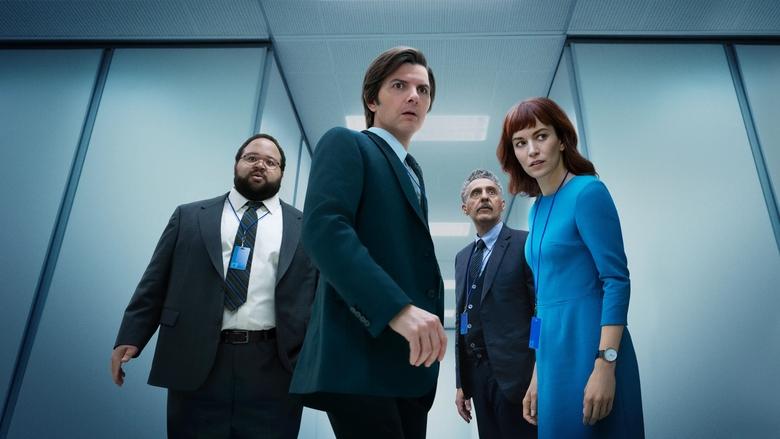
The show built entirely on the premise that truth is what you’re denied. Season 2 digs deeper into the architecture of institutional deception — what Lumon Industries knows and what it keeps from its workers. The severed mind as the perfect metaphor for a culture of managed ignorance.
Adolescence
Netflix · Limited Series · All episodes streaming
Adolescence
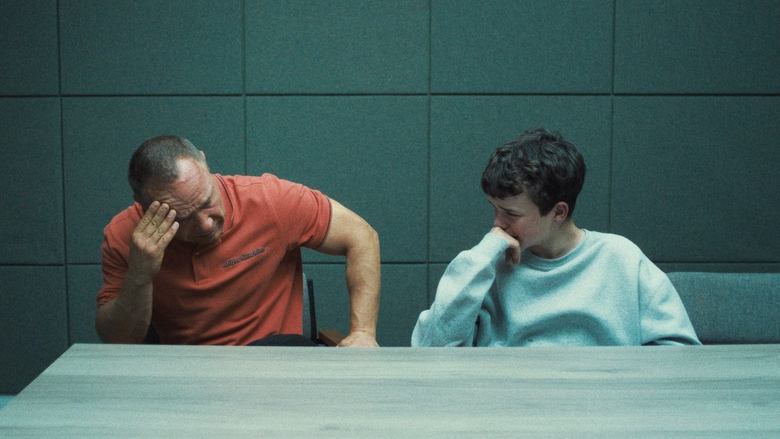
Shot in unbroken single takes, each episode follows a different participant in the investigation of a 13-year-old boy accused of murder. A forensic portrait of how truth fractures across testimony. No one is lying, exactly. Everyone has a different piece of it. Devastating and technically extraordinary.
Zero Day
Netflix · Limited Series · All episodes streaming
Zero Day
Robert De Niro as a former US president pulled from retirement to chair a national inquiry into a catastrophic cyberattack. Beneath the commission hearings lies a dense web of buried motivations, partisan distortion, and institutional rot. Truth here is the thing every power player wants to own — and the one thing the inquiry was never designed to find.
Apple Cider Vinegar
Netflix · Limited Series · All episodes streaming
Apple Cider Vinegar
Based on the true story of Belle Gibson, who built a wellness empire on the lie that she had healed herself from terminal cancer through diet. Six episodes on how a constructed narrative becomes belief, belief becomes brand, and brand becomes too lucrative for anyone to question. A true story about a lie so well-told that it didn’t need to be true.
On the Horizon — Worth Tracking
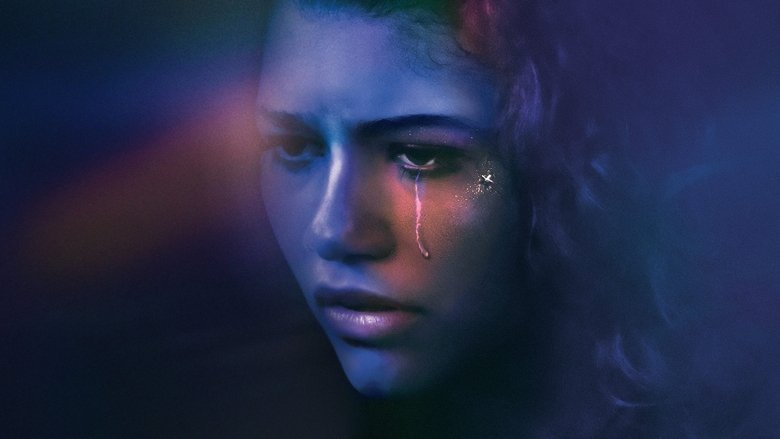
Euphoria
HBO · Season 3 · Premieres 12 April
Euphoria
Season 3 returns with a five-year time jump and an almost entirely new supporting cast. Zendaya’s Rue is older but the question around her is the same one the show has always circled: how much of what she tells us — and herself — is true? One of the few shows built entirely on the unreliability of its narrator’s self-perception.
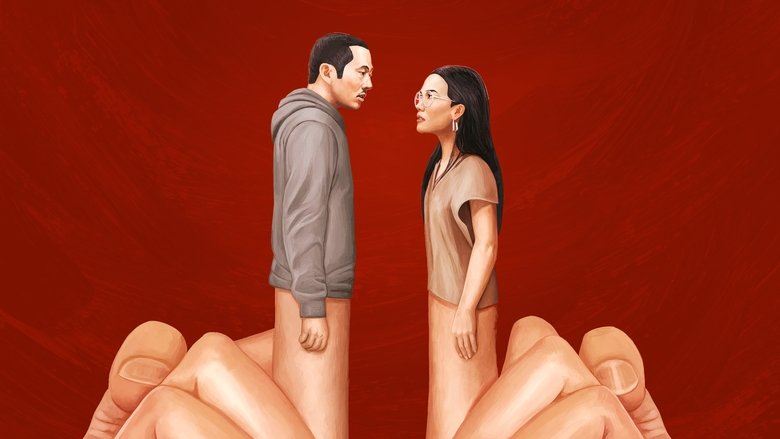
BEEF
Netflix · Season 2 · Premieres 16 April
BEEF
Lee Sung Jin’s anthology returns with an entirely new cast: Oscar Isaac, Carey Mulligan, Cailee Spaeny, Charles Melton. A24 producing. Season 1 unravelled two lives from a single moment of road rage — this season follows the same logic into different wreckage. One of the most anticipated series of the year.
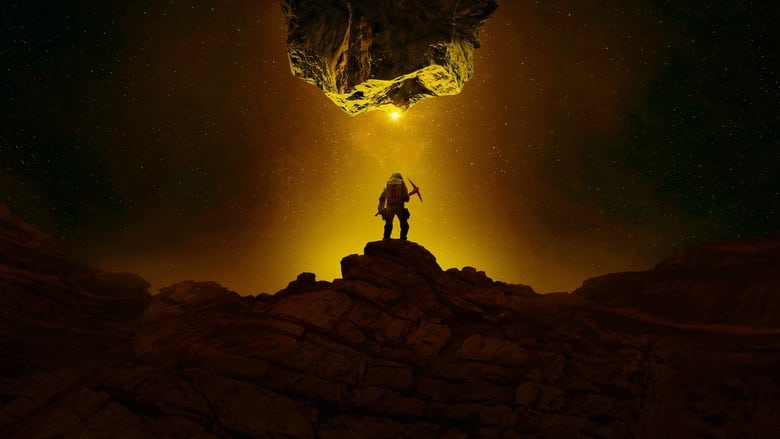
For All Mankind
Apple TV+ · Season 5 · Premieres 27 March · Weekly
For All Mankind
The alternate-history space race drama launches its fifth season this week. The show’s central conceit — what if the Soviet Union had won the moon landing? — has always been a meditation on how a single historical fact, revised, reshapes everything downstream. Each season asks: how contingent is the world we think of as inevitable?
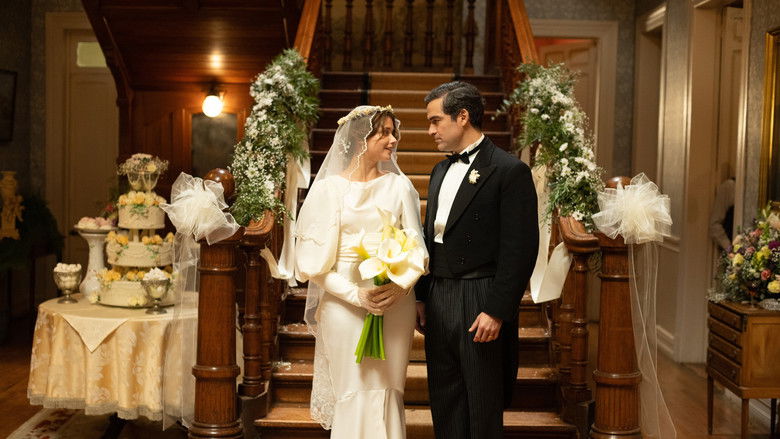
The House of the Spirits
Prime Video · Series · Premieres 29 April
The House of the Spirits
Isabel Allende’s novel adapted for series — a multigenerational saga of a Chilean family across decades of political upheaval, clairvoyance, memory, and erasure. One of the great Latin American works about who gets to write history and who disappears from it. A serious literary adaptation arriving at exactly the right moment.
Under the Radar
Slow Horses
Apple TV+ · S1–4 Streaming · S5 in production
Slow Horses
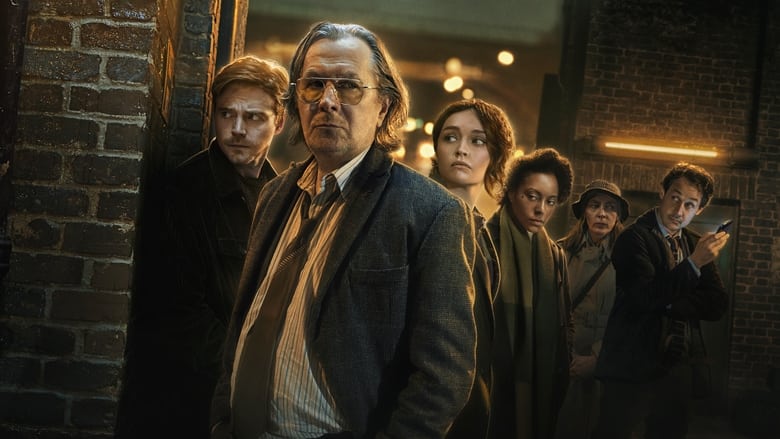
Gary Oldman leads MI5’s dumping ground for disgraced agents. Beneath the institutional humiliation lies a razor-sharp espionage drama about the gap between what intelligence agencies know and what they admit to knowing. Every season peels back another layer of institutional lying. Four seasons deep and still the best spy show on television.
Ripley
Netflix · Season 1 · Streaming now
Ripley
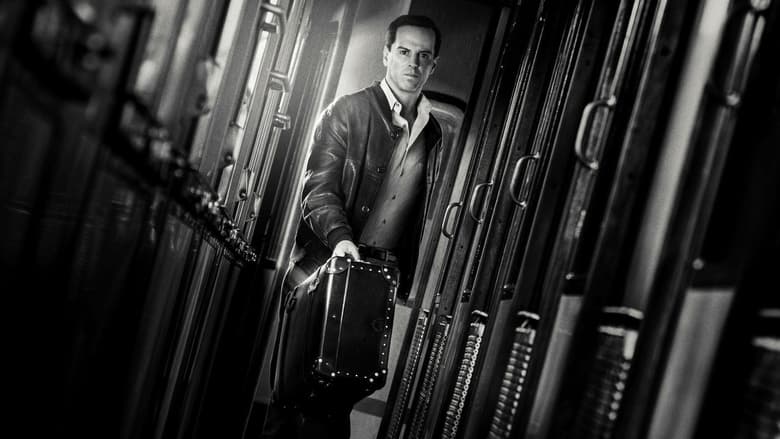
Steven Zaillian’s adaptation — shot in black and white, eight episodes, Andrew Scott as Tom Ripley. Identity theft, forgery, and an entire life constructed on the audacity of a sustained lie. The most beautifully made thing on Netflix in the last two years, and one of the most precise studies of how conviction substitutes for truth.
The Agency
Paramount+ · Season 1 · Streaming now
The Agency
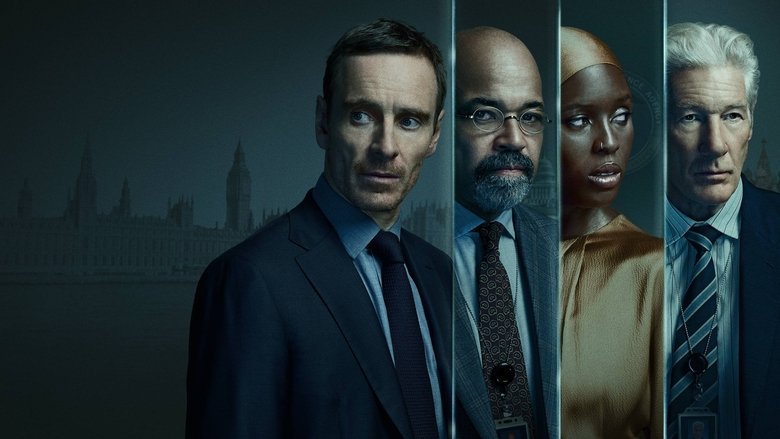
Michael Fassbender plays a CIA operative whose deep-cover life and real identity collide. Adapted from Le Bureau des Légendes, espionage as a study in constructed selfhood — identity as operational fiction, intimacy as the one thing you can’t surveil or control. If you missed it first time around, now is the time.
Disclaimer
Apple TV+ · Limited Series · Streaming now
Disclaimer
Alfonso Cuárón directs all seven episodes. Cate Blanchett plays a documentary filmmaker whose carefully constructed life unravels when her husband reads a novel that describes events she has never spoken about. A precise, visually extraordinary study of the gap between the story you tell yourself and the truth someone else holds about you.
🌎 The Continent | Subtitles required
The best television in the world isn’t always in English. The Continent highlights international series worth crossing a language barrier for.
Dark
Germany — Netflix — 3 Seasons — Complete
Dark
German
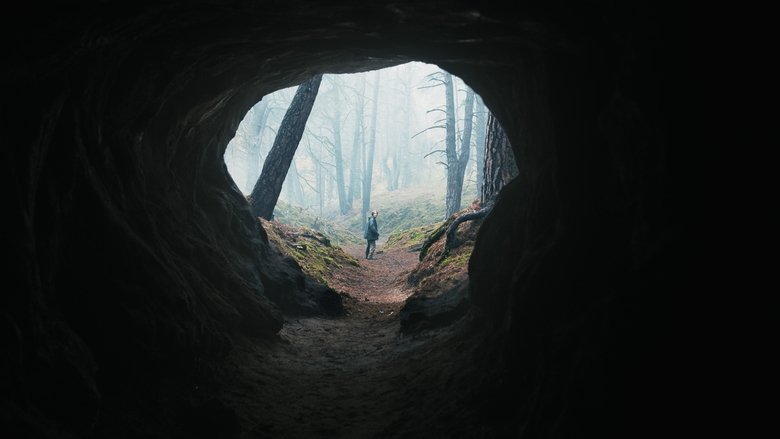
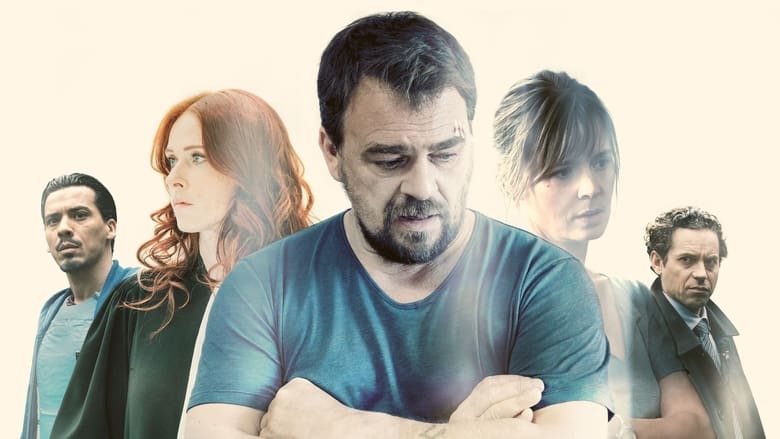
The most rigorous argument on television for why truth is not a fixed point but a question of when. Across three seasons, Dark builds a closed causal loop in which every secret unearthed simply relocates the lie — memory corrupts, testimony shifts, and the characters who believe they are finally seeing clearly are always, structurally, the last to know.
1994
Italy — Sky Atlantic / Netflix — 1 Season — Complete
1994
Italian
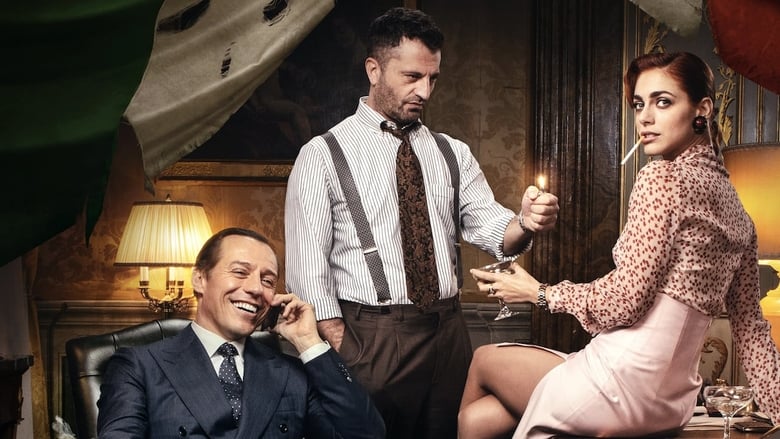
The third entry in Stefano Accorsi’s 1992 trilogy, and its most politically raw. Set during the implosion of Italy’s First Republic — Tangentopoli still burning, Berlusconi ascending — 1994 dramatises the moment a nation collectively decided which version of events it could live with, and chose badly.
Occupied
Norway — TV 2 / Netflix — 3 Seasons — Complete
Occupied / Okkupert
Norwegian
Jo Nesbø’s scenario — Russia, with EU backing, quietly occupies Norway to resume oil production after a green-energy pivot — was considered provocative fantasy in 2015. It is considerably less funny now. A slow-burn study in the official lie, the diplomatic non-statement, and the bureaucratic violence of language stripped of meaning.
Spiral
France — Canal+ / Walter Presents — 8 Seasons — Complete
Spiral / Engrenages
French
Eight seasons and no single character you could call honest, not entirely, not all the way down. The show treats the Paris justice system as an ecology of competing truths: the police version, the juge d’instruction’s version, the defence lawyer’s version, each internally coherent and mutually incompatible. The truth in Spiral exists; it’s just that the machinery built to find it was designed, in part, to lose it.
Behind the Curtain | The Industry Story You Weren’t Meant to See Clearly
Labour, money, censorship, institutional suppression — what’s actually happening behind the films and shows you watch. The structural shifts the entertainment press rarely names directly.
The Suppression

An Oscar-Winning Documentary Has No US Distributor. Now a Mayor Is Trying to Evict the Cinema Showing It.

No Other Land — a documentary made jointly by Palestinian activist Basel Adra and Israeli journalist Yuval Abraham, chronicling the demolition of homes in the Masafer Yatta community — won the Academy Award for Best Documentary in March 2025 and has been distributed in 24 countries. It still has no US distributor. When O Cinema South Beach, a non-profit on city-owned property, began showing sold-out screenings, Miami Beach mayor Steven Meiner — calling the film “anti-semitic” — introduced a resolution to terminate the cinema’s lease and cut off its funding. “The threats of closing a cinema down because some people do not like the films we show certainly sounds like censorship to me,” co-founder Kareem Tabsch told NPR.

Why this matters: When elected officials can threaten the physical infrastructure of exhibition to suppress a film, what’s left isn’t soft censorship — it’s a hard wall.

More info here →
The Disclosure

The Oscars Are Moving Toward Mandatory AI Disclosure — Because Nobody Volunteered It

Two of this awards season’s most-nominated films — The Brutalist and Emília Pérez — were revealed in January 2025 to have used AI voice tool Respeecher in post-production: The Brutalist to refine Hungarian vowels, Emília Pérez to blend Karla Sofía Gascón’s voice with another singer’s. Neither film disclosed this proactively. Both came out under press scrutiny. The Academy, which currently offers only an optional AI disclosure form, is now investigating mandatory disclosure requirements for the 2026 cycle, with its SciTech Council drafting language, according to Variety.

Why this matters: Voluntary disclosure produced silence. That’s a structural story about who decides what audiences know about the films they’re watching.

More info here →
The Permission

India’s Inaugural Documentary Festival Pulled Two Films Days Before Opening — Citing “Government Permission”

At India Doc Fest in New Delhi (October 2025), Farming the Revolution (dir. Nishtha Jain, Best International Documentary at Hot Docs 2024) — which chronicles India’s 16-month farmers’ protest of 2020–21 — and My Sweet Land (dir. Sareen Hairabedian), documenting the ethnic Armenian community displaced from Nagorno-Karabakh, were quietly removed from the lineup after government permission for public exhibition was denied. The festival’s artistic director wrote: “The very absence of these films is a reminder of why spaces like Doc Fest must exist: to uphold dialogue, dissent and the freedom to see and be seen.” My Sweet Land had previously been dropped as Jordan’s Oscar entry after Azerbaijan objected to its portrayal of displaced Armenians, reported Outlook India.

Why this matters: Both films document events governments have strong political reasons to disappear — removed not by court order, but by the quieter mechanism of permission simply not being granted.

More info here →