Who has it. Who loses it. What it costs.
The week I started putting this issue together, a billionaire’s son finalised his takeover of a major American studio. Separately, an AI company that promised it wouldn’t train on your likeness quietly changed its terms. And Sidney Lumet’s Network — made fifty years ago — described both events more precisely than any piece of current journalism I read. That’s either a great argument for cinema, or a terrifying one about how little changes. Maybe both.
Power is this issue’s subject. Not power as spectacle — the throne rooms, the monologues, the slow-motion falls from grace. The mechanics of it. Who holds it quietly. Who loses it without noticing. What the camera sees when it decides to look directly.
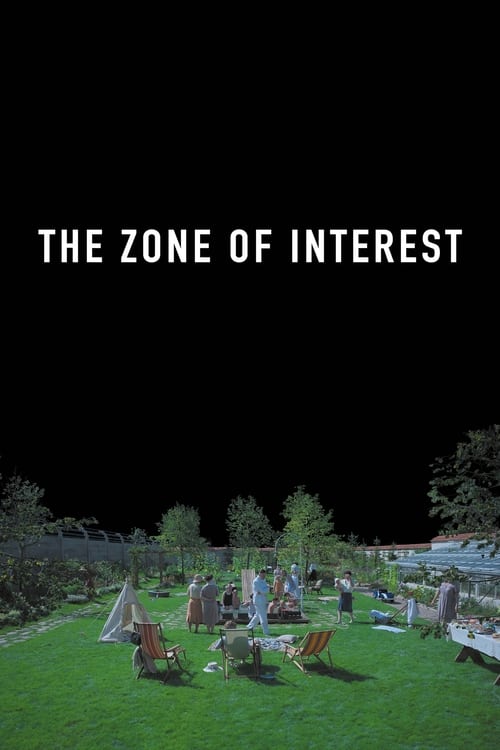
Network is in the archive. The Zone of Interest is in Flashpoint. The Godfather is in the Argument — and so is Gomorrah, which is a better film about power than most people realise. The television list this week is almost entirely about institutions: what they protect, what they cost, who they were built to serve.
As always — stay if it resonates.
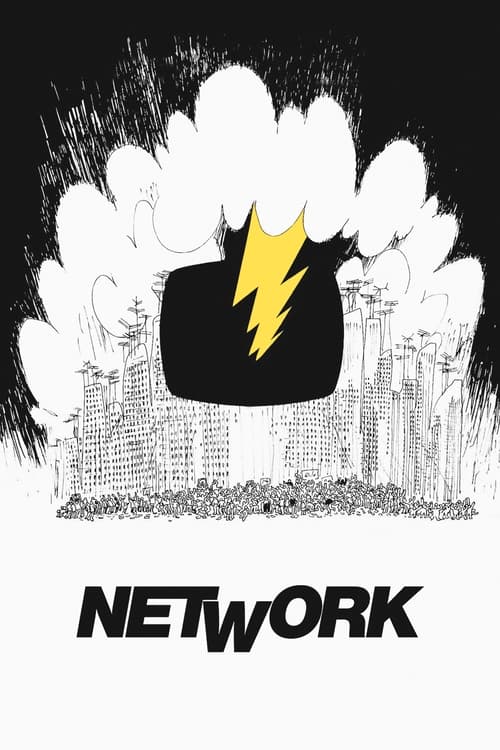
Network is the Rewind pick for Issue 002 because it describes precisely what is happening this week, not just generally. The Paramount-Skydance merger — where a billionaire’s son explicitly negotiated favourable media coverage in exchange for regulatory approval — is the film’s boardroom scene rendered in real time. Paddy Chayefsky’s central insight — that corporations owning the microphone will amplify any outrage that serves profit, and silence any truth that threatens it — has become the operating manual of 2026’s information landscape.
Howard Beale’s famous speech: “When the 12th-largest company in the world controls the most awesome propaganda force in the whole godless world, who knows what shit will be peddled for truth on this network?” In 2026, it’s not the 12th-largest company. It’s the first.
Fifty years on, the film has not aged into a historical curiosity. It has aged into a documentary.
“The best films about power make us root for the wrong person. Is that manipulation — or the whole point?”
There’s a flattering story we tell about cinema’s relationship to power: that the best films expose it, interrogate it, hold it up to the light. The more honest version is that the best films about power make us want to belong to it. The Godfather doesn’t just depict a crime empire. It makes the crime empire look like home. Which leaves a question about what the camera is actually doing — and whether that matters.
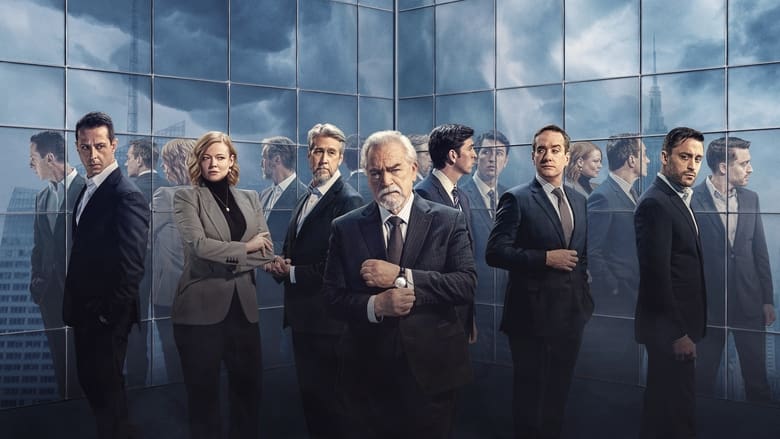
Every time Vito Corleone speaks softly and the score swells, you’re being worked on — and the film knows it. The Godfather doesn’t just depict a crime empire; it makes you want to belong to one, because Coppola lights it like a Renaissance painting and scores it like a lullaby. Succession’s Logan Roy is a bully, a narcissist, and an emotional abuser — but the show frames his contempt as vigour, and half the audience called him the only real person in the room. That’s not neutral storytelling. It’s the camera taking sides, and we should at least notice when it does.
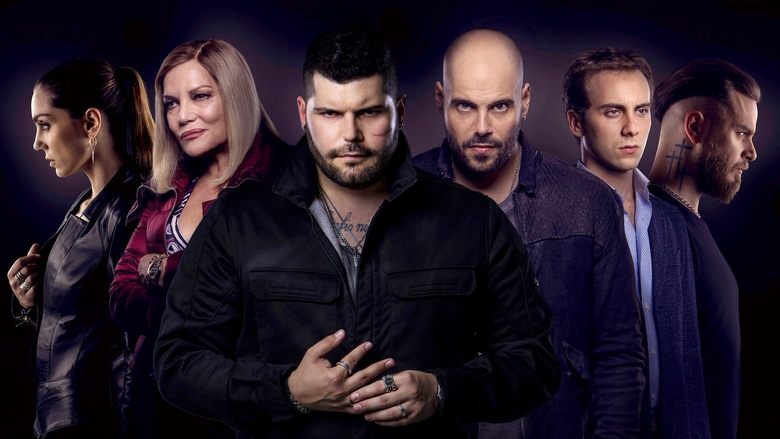
The discomfort of rooting for Tony Soprano isn’t a bug — it’s the entire engine of the show. Gomorrah goes further: Ciro Di Marzio has no redemptive arc, no Hollywood gloss, no likeable quirks to soften what he is — and you’re still watching at 1am, genuinely invested. The show isn’t asking you to find him charming. You just do. That’s not manipulation; that’s the mirror working. If you’d sat back unmoved, nodding sagely that crime is bad, you’d have learned nothing about why people follow charismatic monsters, or why power is so difficult to resist from the inside. Tragedy isn’t a warning label. It’s a mirror, and it only works if you’ve already leaned in.
The Zone of Interest shows the mundane domestic comfort of the Höss family — the commandant of Auschwitz, his wife, their children — while the camp operates just over the garden wall. You hear everything. You see nothing. Power through omission: the most radical choice Glazer could have made, and the most unsettling. The Höss family tends its garden, hosts dinner parties, sends children to school — while exercising total power over human life metres away. The banality of that power is the horror.
At the 2024 Academy Awards, Glazer used his Best International Film acceptance speech to draw a direct line between the Holocaust and the conflict in Gaza — in a room full of Hollywood’s most powerful people. Half the industry stood and applauded. The other half was furious. The argument has never fully resolved. A filmmaker using his own moment of institutional power to say something the institution didn’t want said: that’s the Flashpoint.
On March 5, 2026, Netflix announced the acquisition of InterPositive, a stealth AI startup founded by Ben Affleck in 2022. The system builds AI models from a production’s own dailies, then applies them in post to assist with colour, relighting, and visual effects. Netflix is offering the tools to its creative partners rather than selling them commercially; Affleck joins as a senior adviser.
ByteDance’s AI video model Seedance 2.0 launched on February 12, 2026, and within days users had generated unauthorised clips featuring Tom Cruise, Brad Pitt, and copyrighted IP. The Motion Picture Association sent a cease-and-desist, SAG-AFTRA condemned the “blatant infringement,” and ByteDance indefinitely halted its global API rollout.
In March 2026, AI firm Asteria — co-founded by filmmaker Bryn Mooser and Natasha Lyonne, with backing from CAA and Comcast Ventures — launched Continuum Suite, an AI-enabled cloud operating system for film and TV production. Unlike generative video tools, it functions as a unified workflow layer covering creative development, production coordination, and post.


David Ellison’s Skydance completed its acquisition of Paramount Global in late 2024, ending Shari Redstone’s 30-year family control of the studio. Within months, Paramount+ lost its standalone identity in several markets, key creative executives were replaced, and the company signalled a pivot toward franchise consolidation over auteur-driven projects. The studio that made The Godfather, Chinatown, and Network is now run by a tech heir with a mandate to cut costs and chase IP.
Why this matters: Ellison’s Paramount is the clearest case study in what happens when power in Hollywood shifts from film families to tech money — and what gets lost in that transfer.
More info here →Amazon has been quietly deploying AI tools across its MGM acquisition — automated script coverage, AI-assisted casting analysis, and AI-generated marketing materials for international distribution. Much of this has happened without public announcement, surfacing mainly through trade reporting on workflow changes inside the studio. Writers and directors working with MGM have reported AI-generated notes appearing in development feedback without disclosure of their source.
Why this matters: The absence of transparency about where AI is entering the creative pipeline is the 2024 version of studios not disclosing test screenings — except the stakes are higher.
More info here →A year after the WGA secured AI protections in its 2023 contract — including the right to know when AI is used on a project and a prohibition on AI-generated material counting as source material for writer credit — enforcement has been uneven. The guild’s AI monitoring committee has documented dozens of complaints, but studios have challenged several cases on definitional grounds, arguing that AI “assistance” doesn’t constitute AI “generation.” The semantic battle is where the real power struggle is happening.
Why this matters: The WGA won the argument in 2023. Whether they win the enforcement is the question that will define the next decade of writers’ rooms.
More info here →